
Nearly half of all coronavirus patients in the country have been cured, taking the recovery rate to over 48 per cent.
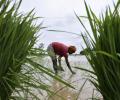
As the growth figures relate to pre-Covid lockdown period it does not reflect the real picture of distress which unfolded from April onwards in the sector, when acute supply disruption led to sharp drop in prices of many commodities largely perishables impacting farmers.

The locusts initially entered Rajasthan from Pakistan and from there the swarms moved towards Madhya Pradesh, Haryana, and Punjab over the last few weeks and are now threatening to enter Uttar Pradesh, putting at risk the summer crop.
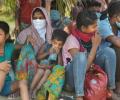
'We don't know how complicated things will get with the onset of the monsoon.'

'The spirit of cooperation between the Centre and states has been diluted in many ways.' 'The level of consultation which used to be there earlier has reduced significantly.'

The government is looking at tweaking provisions of the Indian Contracts Act of 1872 to bring agreements between farmers and companies under its ambit, aiming to prevent exploitation of farm people.

Later, there may be some tax relief aimed at the middle class and measures to benefit the sectors worst hit by Covid-19 and the resultant nationwide lockdown.

Most feel as the movement of people normalises, the in-patient volumes in hospitals will grow and by the end of May, occupancy should be around 50 per cent, and 75 per cent over a period of time.

There has been an exponential increase in the use of technology to validate financial numbers, with a greater reliance on electronic evidence, use of live videos where possible, data analytics, and project management software to overcome the physical limitations in verifying transactions and accounts.

A letter sent out by Delhi government asked all medical directors to provide a written explanation on how the health workers contracted the disease despite wearing protective gear, maintaining safe distancing and taking all precautions.

In total, the Centre plans to purchase around 40.7 million tonnes of wheat from farmers this year, which is almost 19 per cent more than last year.

These are becoming one of the most in-demand commodities in the COVID world with malls, offices, banks, and shops lining up to install the structure at their entrances. The company swamped with these orders is a relatively new one, Chennai-based Nanolife, which has patented its Rajat Bhasma formula or the silver nanoparticles solution as a healthy disinfectant. Sceptics, however, say if a person is potentially exposed to the COVID-19 virus, spraying the external part of the body would not kill the microbe, which is inside the body.
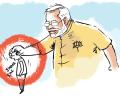
Govt has decided to suspend Sections 7, 9, and 10, which are used to trigger insolvency proceedings for six months or a period not exceeding one year from the date they commence.
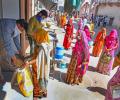
However, experts say that unless clear guidelines are there, it remains to be seen how many people fall within the ambit and who remains excluded.

'Call it by whichever name, but there is transmission happening between people.'
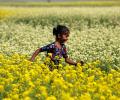
In MP, farmers say sales under new 'Sauda Patrak' method below MSP; Haryana mustard farmers wait for their turn to sell. The annual purchases of major rabi crops in North India largely wheat, mustard and also chana to some extent have been delayed as most cereal mandis were closed in the aftermath of the nationwide coronavirus lockdown.
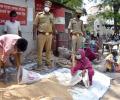
A recent study shows that more than 100 million people are excluded from the public distribution system because the central government insists on using 2011 population figures to calculate state-wise PDS coverage, which effectively leaves out 100 million people, reports Sanjeeb Mukherjee.
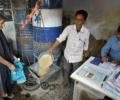
A study by eminent economists, by Jean Drze, Reetika Khera and Meghana Mungikar released few days back shows that more than 100 million people are excluded from the PDS because the central government insists on using 2011 population figures to calculate state-wise coverage under the National Food Security Act.

The stimulus package is expected anytime this week and will be aimed at the urban and rural poor; disadvantaged sections of society; MSMEs and some of the worst-affected sectors.
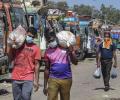
It is likely the government will divide the country into different zones during the proposed extended period of lockdown and might permit a few services to function in safe zones.
 © 2026 Rediff.com - Investor Information - Advertise with us - Disclaimer - Privacy Policy - Sitemap - Feedback - About us - Terms of use - Grievances